THE UNIVERSITY OF
HONG KONG
ANNUAL REPORT 2025

RESEARCH AND INNOVATION

Seeds Of Success Seeds Of Success

The University received acclaim for its research and researchers and continued to invest in expanding facilities and developing talent.

The University’s research excellence and innovation continued to garner strong international recognition in 2024–25, with many of our academics named among the best in their fields and entire disciplines named among the best in Asia and the world. This follows significant investment and effort to attract and develop talent, streamline research services, and expand research facilities to stay ahead of the technology curve. The aim is to solidify our position as a world-class research centre that makes meaningful contributions to science and has enduring impact in local, national and global communities.

Talent recruitment is central to that ambition. In 2025, we welcomed around 100 new academics, from rising stars to scholars at the top of their game, from such institutions as Stanford University, University of Chicago and Oxford University. These recruits add to our substantial existing strengths. For instance, 54 HKU scholars were named in Clarivate’s prestigious Highly Cited Researchers 2025 list. Whole disciplines were also recognised in 2025, with Dentistry, Education and Training, Linguistics and Geography placing among the top 10 in the world in the 2025 QS World University Rankings by Subject. The quality of our research and researchers also enabled us to continue to attract significant support from government funding agencies and have the highest number of young scientists awarded in Hong Kong under the 2025 National Natural Science Foundation of China funding exercise, among many other funding successes. HKU was also honoured to have the highest number of State Key Laboratories in Hong Kong.

Mr Hejun Yin (right), Minister of Science and Technology, led a delegation on a visit to two State Key Laboratories of HKU.

To enable our talent to thrive and excel, the University is expanding our footprint to provide more space for research activities. The first phase of the Tech Landmark is scheduled to open soon, followed by the remaining two phases in 2026. The Tech Landmark will house at least 10 interdisciplinary institutes and significantly raise the profile of interdisciplinary research at the University.

The soon-to-open Tech Landmark will house at least 10 interdisciplinary institutes.

Plans for a physical presence in the Chinese Mainland have also been finalised with the signing of a Memorandum of Understanding (MoU) for a new HKU institute in Shanghai’s Zhangjiang Hi-Tech Park that will accommodate computer and engineering research. The MoU was signed in July with the Shanghai Municipal Education Commission and the People’s Government of Shanghai Pudong New Area. Separately, HKU is also participating in the Greater Bay Area International Clinical Trial Institute, bringing our skills in clinical trials to a larger platform.

Another supportive initiative has been to strengthen services to help scholars navigate the huge array of options and opportunities for funding, licensing, commercialisation and partnerships. In 2025, a one-stop shop was established under the office of the Vice-President and Pro-Vice-Chancellor (Research) to connect researchers with the best unit for their needs and smooth the process for funding applications and the translation of research.

Finally, the University is deeply committed to nurturing young talent through the Graduate School. We have established a supervisory committee for each research student and refocussed the progress monitoring mechanism. We also offer awards and fellowships to incentivise research excellence. Our recent Future- Ready Series is helping advance students’ research capabilities, professional development and overall well-being through such activities as academic workshops, an annual student symposium, alumni fireside chats and wellness initiatives.
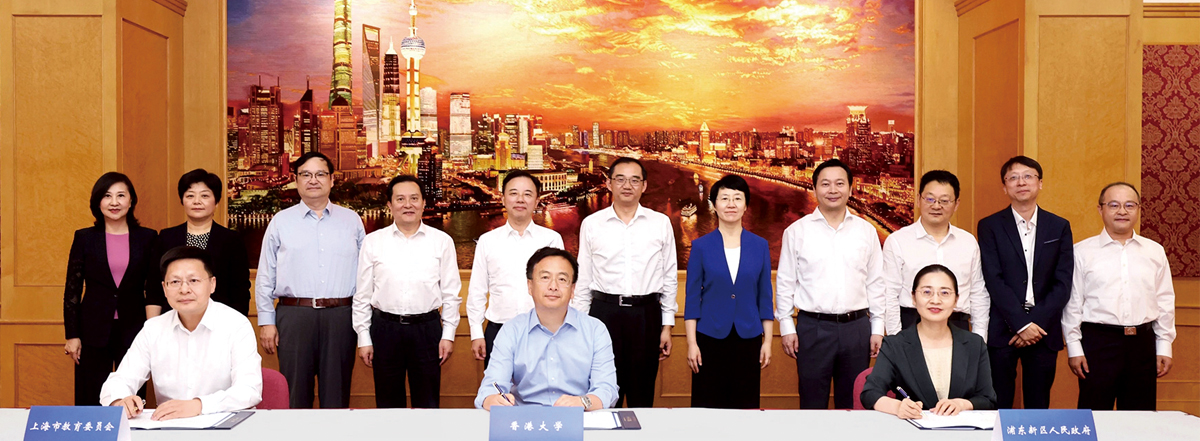
(Front row from left) Mr Linlin Ye, Deputy Director of the Shanghai Municipal Education Commission; Professor Max Shen, Vice-President and Pro-Vice-Chancellor (Research) of HKU; and Ms Difang Zhang, Deputy Chief of Pudong New Area, signed a Memorandum of Understanding in July to establish the HKU-CDS Shanghai Teaching and Research Site in Zhangjiang Hi-Tech Park.
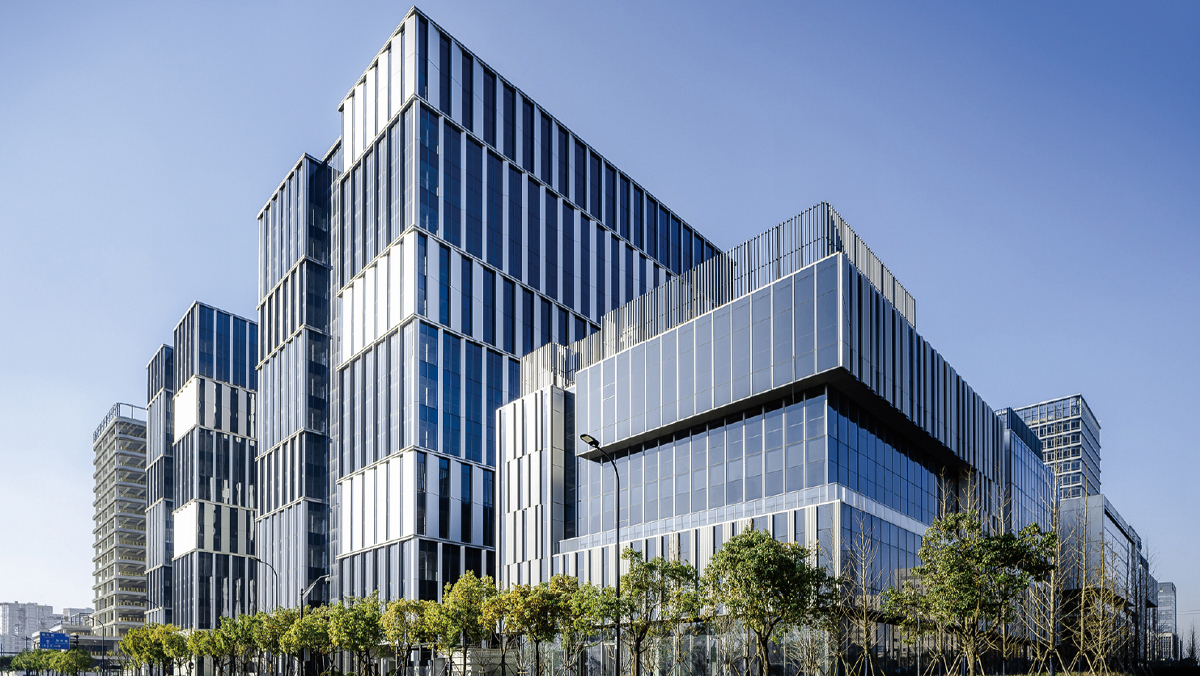
The HKU-CDS Shanghai Teaching and Research Site is located in Zhangjiang Hi-Tech Park, surrounded by a vibrant ecosystem of technology companies.
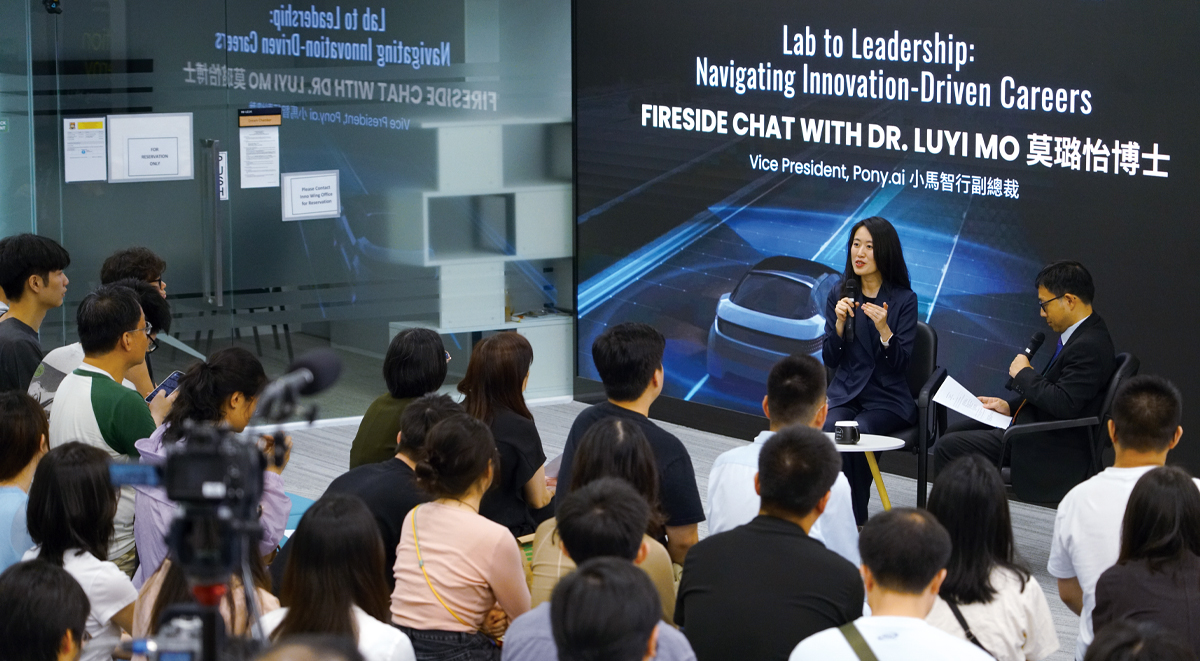
HKU alumna Dr Luyi Mo, Vice President of Pony.ai, a global leader in autonomous mobility, was invited to give a fireside chat jointly organised by the Graduate School and the Postgraduate Student Association.


World-Leading Scholars

A record 54 HKU scholars were named in Clarivate’s Highly Cited Researchers 2025 list, which reflects the impact of individual scholars’ body of work in their disciplines.

CHEMISTRY

Professor
Hongjie DAI
Department of Chemistry
Professor
Renhao DONG
Department of Chemistry
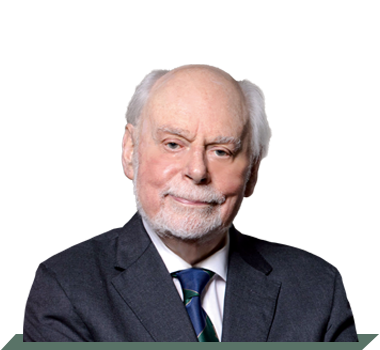
Professor Sir
Fraser STODDART
Department of Chemistry

COMPUTER SCIENCE

Professor
Kaibin HUANG
Department of Electrical and Electronic Engineering
Professor
Yuanwei LIU
Department of Electrical and Electronic Engineering

CROSS-FIELD

Dr CHAN
Kwok-hung
Department of Microbiology, School of Clinical Medicine
Professor
CHU Hin
Department of Microbiology, School of Clinical Medicine
Professor
Kuishuang FENG
Department of Geography
Professor
Zhengxiao GUO
Department of Chemistry
Professor Ivan
HUNG Fan-ngai
Department of Medicine, School of Clinical Medicine
Professor
Wei JIA
Department of Pharmacology and Pharmacy
Professor Tommy
LAM Tsan-yuk
School of Public Health
Dr Eric
LAU Ho-yin
School of Public Health
Professor Kathy
LEUNG Sze-man
School of Public Health
Professor
Can LI
Department of Electrical and Electronic Engineering
Professor
Yuguo LI
Department of Mechanical Engineering
Professor
Shunlin LIANG
Department of Geography
Professor
MAK Tak-wah
Department of Pathology, School of Clinical Medicine
Professor
Malik PEIRIS
School of Public Health
Professor Leo
POON Lit-man
School of Public Health
Professor
Siddharth SRIDHAR
Department of Microbiology, School of Clinical Medicine
Professor
Han WANG
Department of Electrical and Electronic Engineering
Professor Ian
WONG Chi-kei
Department of Pharmacology and Pharmacy
Professor Joseph
WU Tsz-kei
School of Public Health
Professor
Peng WU
School of Public Health
Professor
YEN Hui-ling
School of Public Health
Professor Kelvin
YEUNG Wai-kwok
Centre of Development and Resources for Students; Department of Orthopaedics and Traumatology, School of Clinical Medicine
Dr Cyril YIP
Chik-yan
Department of Microbiology, School of Clinical Medicine
Professor
Shuofeng YUAN
Department of Microbiology, School of Clinical Medicine
Professor Ray
Runyang ZHONG
Department of Data and Systems Engineering
Professor
Jie ZHOU
Department of Microbiology, School of Clinical Medicine

ECONOMICS AND BUSINESS

Professor
Chen LIN
President’s Office;
HKU Business School

ENVIRONMENT AND ECOLOGY

Professor
Chuyang TANG
Department of Civil Engineering

GEOSCIENCES

Professor
Peng GONG
President’s Office;
Faculty of Science;
Faculty of Social Sciences
Professor
Guochun ZHAO
Department of Earth and Planetary Sciences
Professor
Yuyu ZHOU
Department of Geography

IMMUNOLOGY

Mr Jianpiao CAI
Department of Microbiology, School of Clinical Medicine
Professor Vincent
CHENG Chi-chung
Department of Microbiology, School of Clinical Medicine
Professor Benjamin
John COWLING
School of Public Health

IMMUNOLOGY, MICROBIOLOGY

Professor Jasper
CHAN Fuk-woo
Department of Microbiology, School of Clinical Medicine
Professor Kelvin
TO Kai-wang
Department of Microbiology, School of Clinical Medicine
Professor
YUEN Kwok-yung
Department of Microbiology, School of Clinical Medicine

IMMUNOLOGY, MOLECULAR BIOLOGY AND GENETICS

Professor Gabriel
Matthew LEUNG
School of Public Health

MATERIALS SCIENCE

Professor
LI Lain-jong
Department of Mechanical Engineering
Professor
Chunyi ZHI
Department of Mechanical Engineering

MICROBIOLOGY

Professor
Tong ZHANG
Department of Civil Engineering

PHYSICS

Dr Yuan WANG
Department of Mechanical Engineering
Professor
Wang YAO
Department of Physics
Professor
Shuang ZHANG
Department of Physics;
Department of Electrical and Electronic Engineering
Professor
Xiang ZHANG
President’s Office;
Faculty of Engineering;
Faculty of Science

SOCIAL SCIENCES

Professor
Ester CERIN
School of Public Health
Professor Timothy
HEW Khe-foon
Faculty of Education
Professor
Xingjian LIU
Department of Urban Planning and Design
Professor
Xiaohu ZHANG
Department of Urban Planning and Design

Choosing HKU

About 100 top scholars from leading global institutions opted to join HKU over the past year, which in turn helped attract talented research students to the University.

NOBEL PRIZE-WINNING PHYSICIST

Physicist Professor Ferenc Krausz, the 2023 Nobel Laureate in Physics, has joined HKU as Chair Professor in the Department of Physics. Professor Krausz has pushed the frontiers of human knowledge forward through his work in ultrafast laser science and quantum optics. He and his team were the first to generate light pulses in the attosecond range, allowing electron movements to be observed in real time. He has been applying these findings to the development of new medical diagnostic techniques, working initially in Hungary and Germany and now branching out to HKU, which he sees as a critical base for advancing this work. Professor Krausz, a native of Hungary, has most recently been based at the Max Planck Institute of Quantum Optics and Ludwig-Maximilians-Universität München in Germany.

Professor Ferenc KRAUSZ

HKU’s interdisciplinary vision aligns perfectly with the next chapter of my career. It is one of the best universities in the world and it attracts a lot of young talents from all over the world. We cannot be successful in our research unless we attract the best talents to work with us. I very much look forward to setting up research activities here in collaboration with HKU’s world-class Clinical Trials Centre. If we succeed, we will be the global pioneers of future personalised preventive care.

Professor Ferenc Krausz delivered his inaugural lecture titled ‘Toward Affordable Preventive Healthcare: Basic Science Addressing Grand Challenges’ at the Grand Hall of the Lee Shau Kee Lecture Centre, drawing an audience of over 800 participants from academic, policy, and student communities.

PLANETARY SCIENCE EXPERT

Professor Nicolas Dauphas joins HKU from the University of Chicago, having produced groundbreaking insights on the origins and evolution of planets and other objects in the solar system using high-precision mass spectrometry, synchrotron techniques, laboratory experiments and theoretical modelling. Among his findings, he demonstrated that Mars is a stranded planetary embryo and that Earth and the Moon have near identical isotopic compositions, challenging traditional models of lunar formation. As Chair Professor of Cosmochemistry, he is leading a new initiative to build HKU into a leading hub in Asia for cosmochemistry and planetary science.

Professor Nicolas DAUPHAS

I aim to establish a world-class research programme that expands Hong Kong’s capabilities for space-mission sample analysis and will train students and postdocs to lead the next wave of discovery. Hong Kong’s international outlook and the Greater Bay Area’s innovation ecosystem make it an ideal base for ambitious, collaborative research. The welcome so far has been outstanding and HKU has provided excellent institutional support.

STEM CELL TRAILBLAZER

Professor Guoping Fan comes to HKU from the United States, where he pursued postgraduate studies and spent years based mainly at the University of California, Los Angeles. He has produced landmark research on stem cells and epigenetics, with his research papers cited more than 20,000 times. When he was made an offer to join the School of Biomedical Sciences, he saw a chance to move in new directions and to build on the positive impressions from his youth of Hong Kong as a prosperous and promising city.

Professor Guoping FAN

I am impressed by the talents and resources available and the potential for Hong Kong to be a bridge connecting the Chinese Mainland with Western countries. The infrastructure for biomedical research here is outstanding, and HKU also attracts top students from across the region. I am convinced this is a great opportunity for me not only to do great science but also expand my horizon to venture into translational medicine.

SEMICONDUCTOR LEADER

Strong initiatives by HKU and the Government of the HKSAR to promote the development of semiconductor and microelectronics technologies attracted Professor Yuhao Zhang to the University from Virginia Tech, where he had led semiconductor research in one of the largest academic research centres in power electronics in the world. Professor Zhang intends to focus his research and teaching on power and energy applications for semiconductor technologies, which are set to play an important role in the future in such areas as large data centres, low-altitude economy, electric vehicles and power grids with renewable energy. One of his plans while at HKU is to establish an industrial consortium to develop real-world applications of academic innovation.
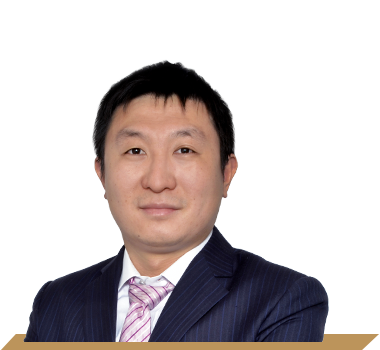
Professor Yuhao ZHANG

The University has offered outstanding support, both in vision and practical resources. For example, it approved the new Centre for Advanced Semiconductors and Integrated Circuits and a new Master of Science in Engineering programme in Integrated Circuits and Electronic Systems, both of which I am involved in. I already have a sizeable group and laboratory and have more than five industry sponsors and government funding. I feel very fortunate to be at HKU at such an exciting time and I especially enjoy the warm and collaborative atmosphere.

THE BETTER OPTION

Kunxiang Peng was all set to pursue a fully funded PhD at the Massachusetts Institute of Technology (MIT), offered in February 2025, when geopolitical events intervened. Research funding cuts in his field of earth science, changing US policies regarding student visas and rising political tensions within America combined to make the option much less attractive. When he began to think of alternatives, HKU jumped to the top of his list. He was impressed by the swift, welcoming response he received, as well as the presence of scholars who could enable him to advance his research, such as recent recruit Professor Nicolas Dauphas and incoming Professor Meng Guo from Yale University in the Department of Earth and Planetary Sciences.

Kunxiang PENG

Giving up MIT in favour of HKU was, for me, a very natural decision. There are scholars here like Professor Dauphas, who has had a profound influence in earth science and geochemistry. Both Hong Kong and HKU are also uniquely positioned to leverage the academic and funding resources of the Chinese Mainland, while fostering global collaborations. A forthcoming international lunar soil symposium, jointly organised by the Chinese Academy of Sciences and HKU, is a prime example of these advantages.